Stone 05 Independent notes
Carnac stones: who built them and what we know
The Carnac alignments are among the largest groups of prehistoric standing stones in the world. They were raised by Neolithic farmers, long before the Celts, and their purpose is still debated.
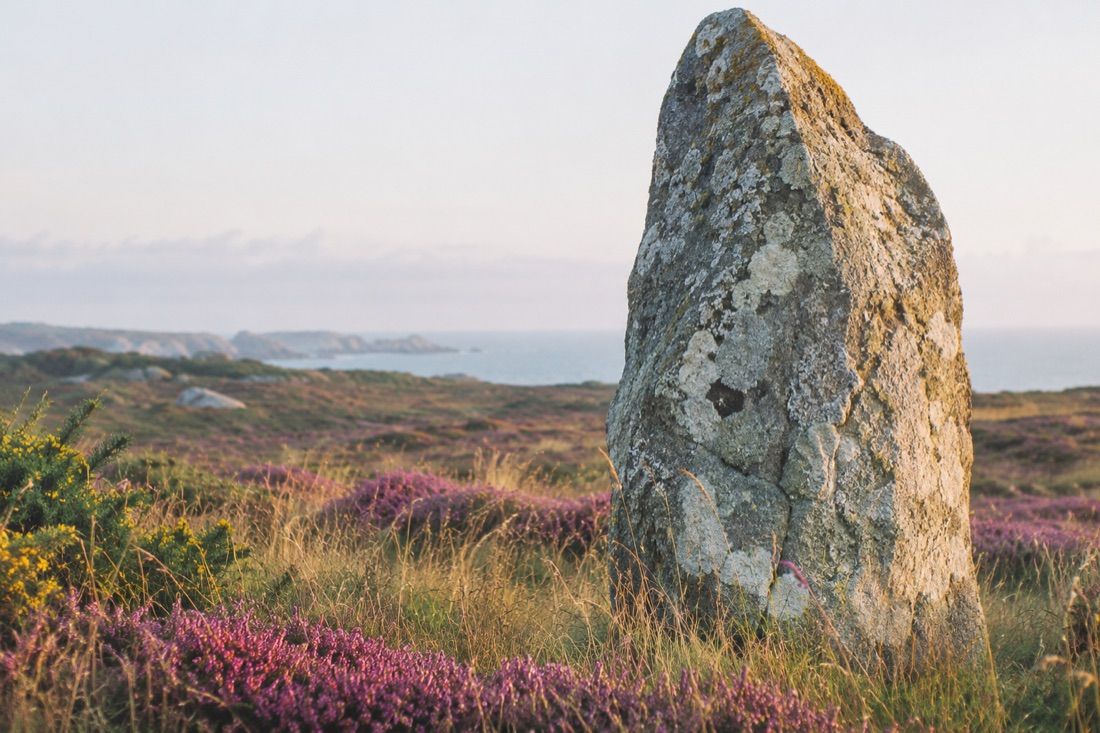
What are the Carnac stones?
Near the town of Carnac in Morbihan, thousands of standing stones, usually quoted at more than three thousand, stand in long parallel rows. The main groups are known as Ménec, Kermario and Kerlescan. Alongside them are burial mounds, dolmens and single menhirs. The words dolmen and menhir themselves come from Breton, from taol, table, and men, stone, plus hir, long.
Who built the Carnac stones?
Neolithic communities. Archaeologists place the main building phases in the fifth to the third millennium BC, with different monuments of different dates. That is thousands of years before Celtic languages arrived in the region, so the idea that the Celts or Druids built the rows is a later myth. The builders left no writing, and we do not know what language they spoke.
Is Carnac older than Stonehenge?
Yes, in the main. The stone settings of Stonehenge belong to the third millennium BC, while the earliest Carnac monuments are older. They are different kinds of site: Stonehenge is a ring with lintels, and Carnac is made of rows and many separate monuments across a region. Comparisons are useful as a rough guide to how widespread megalithic building was in Atlantic Europe.
What was the purpose of the alignments?
Nobody knows for sure. Suggestions include alignments to the sun or moon, ritual processions, territorial markers and burial or ancestor cults. No single theory is accepted, and anyone who claims certainty is selling something. The honest summary is that the stones were important to their builders, and that we have the shapes but not the stories.
The legend of the stone soldiers
Local folklore has its own answer. A popular legend says the rows are Roman soldiers, pursued by the saint Cornély, who turned them into stone. The church in Carnac is dedicated to him. The tale belongs to the folklore side of the story, covered in the guide to Breton legends.
Visiting the stones
The main fields are open to view, but in the busy season visitors are usually kept to marked paths so that the ground and the stones are not damaged, and entering among the stones may be limited to certain times. A prehistory museum in Carnac explains the finds, and other sites in the area, such as the great fallen menhir at Locmariaquer and the carved passage tomb on the island of Gavrinis, are worth the trip. Check the local rules and opening hours before going.