Stone 07 Independent notes
Places to visit in Brittany: heritage sites, Brocéliande and festivals
Brittany rewards a culture-first itinerary: granite churches and calvaries, museums of Breton life, legend country and a summer calendar of music. Here is a plain map of the main stops.
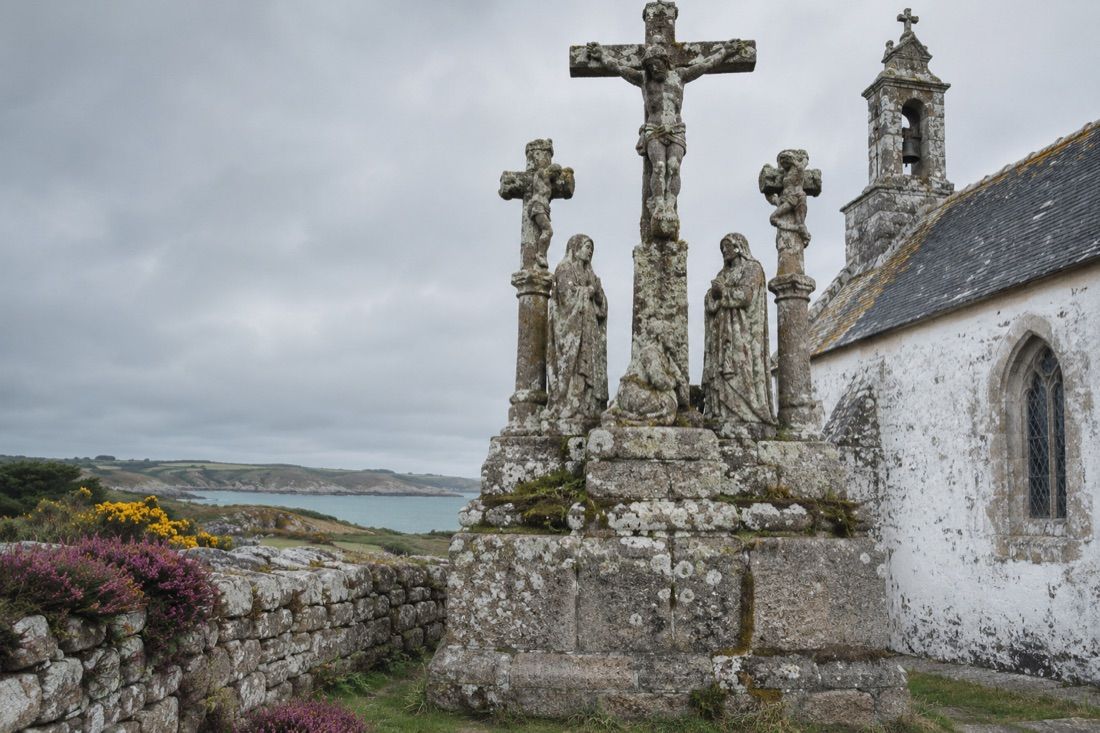
Parish closes and calvaries
The parish closes, or enclos paroissiaux, of western Finistère are a signature of Breton heritage: a walled churchyard with a carved gateway, an ossuary and a calvary with many stone figures. Guimiliau, Saint-Thégonnec, Sizun, Lampaul-Guimiliau and La Roche-Maurice are among the best known. Some ossuaries carry carvings of the Ankou, which links the visit to the legends guide.
Museums and cities
Quimper has the departmental Breton museum, a good first place to see costume, furniture and craft. Rennes has Les Champs Libres, a cultural complex that includes the Museum of Brittany. Nantes, historic capital of the dukes of Brittany, has the Château des ducs de Bretagne. Saint-Malo and Dinan give the walled towns and medieval streets. Check each museum's own pages for opening days.
Brocéliande and the legend country
The forest of Paimpont is the traditional Brocéliande, and signed paths lead to places linked to Merlin and Viviane, the Barenton spring and the Valley of No Return. It is a pleasant walk and a lively piece of local tradition, but the Arthurian sites there are tradition and not archaeology. For the background, read about Breton legends. Visitors interested in King Arthur and Brittany will also meet the same stories in many museums and local guides.
Megaliths
The best known site is Carnac. Further sites include the cairn of Barnenez in Finistère, one of the oldest surviving built monuments in Europe, and the carved passage tomb on Gavrinis. Allow time, wear walking shoes and follow the marked paths.
Unusual stops
Locronan, a village of old granite houses in Finistère, holds a procession called the Troménie, the grand version of which takes place only every six years. Smaller chapels with painted ceilings, pardons, which are local religious festivals, and the coastal path itself, called the GR 34, give a less crowded view of the region.
Celtic festivals
In summer, Brittany holds Celtic festivals. The Festival de Cornouaille in Quimper takes place in July and the Festival Interceltique de Lorient takes place in August. The fest-noz, the night dance, can be found at many local events. Dates change each year, so check the official site of each festival before booking.